Tree Removal Services in Augusta, GA
Call (706) 204-7547 for a free written estimate, or send a photo of the tree and we will call you back.
A tree that is dead, leaning or sitting on a roof does not wait for a convenient week. Tree removal Augusta GA homeowners need usually comes down to three things: a crew that is insured, a written price before any saw starts, and cleanup that does not leave you hauling limbs to the curb yourself.
A Local Referral Service, Not a Hidden Contractor
We are a local referral service. We connect Augusta homeowners with an independent tree contractor and show you how that contractor works, what a job involves and what changes the price, so you can judge the quote before you accept it.
Augusta’s trees have real problems of their own: old water oaks that rot from the inside, loblolly pines stressed by the southern pine beetle, and storm damage that has not fully cleared since Hurricane Helene on September 27, 2024.
We do not hide the contractor behind a vague “our team”. The contractor’s insurance and credentials are listed on our credentials page, and you are free to ask for the certificate of insurance and verify it with the insurer before you agree to anything.
On This Page
- How a removal job runs, from estimate to stump
- How to tell a real tree company from a lead-gen page or storm-chaser
- What to do in the first hour after a tree falls
- What changes the price
- Which Augusta trees fail most often
- Local rules on permits, burning, yard waste and power lines
- Plain answers to common Augusta homeowner questions
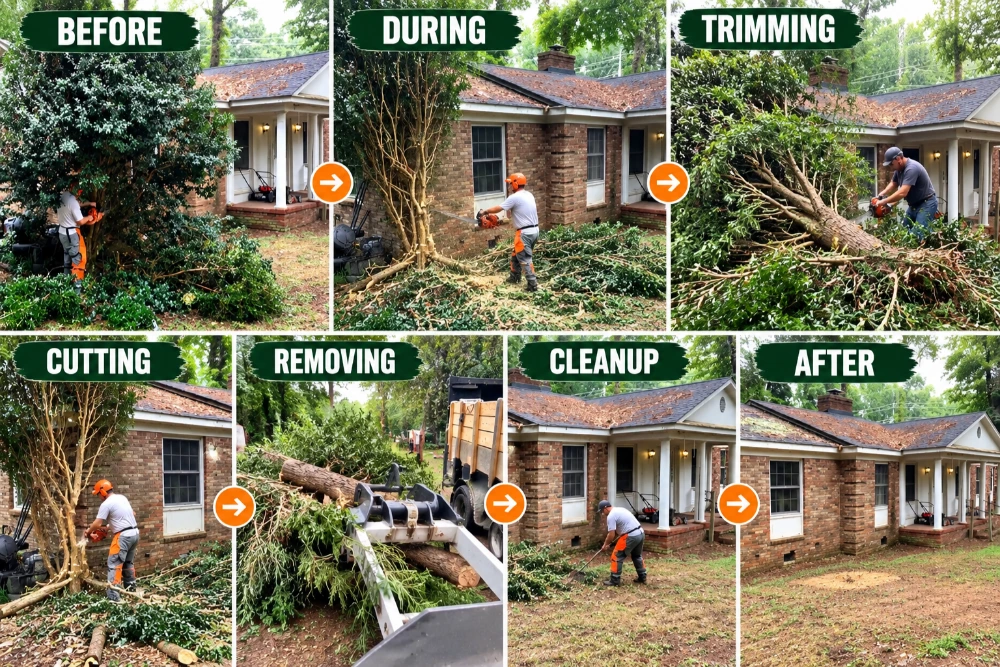
Our Tree Removal Augusta GA Process, Step by Step
A tree removal job has six steps: estimate, permit check, site prep, cutting and lowering, cleanup, and the stump decision.
Free Written Estimate
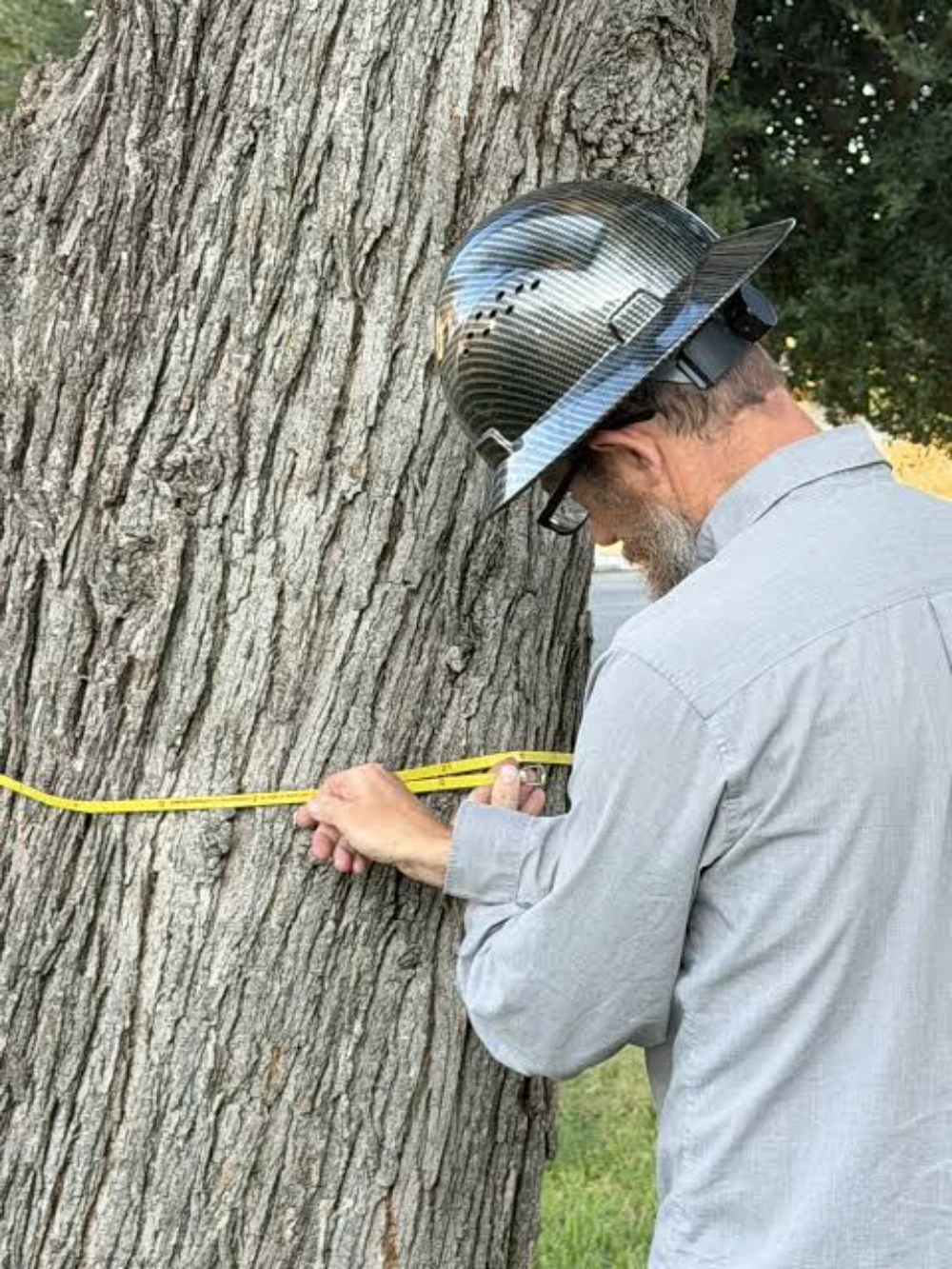
An arborist or crew lead looks at the tree, the lot and anything it could hit: the house, fences, pool or service line. You get the price in writing, with stump and debris haul-away listed as included or extra.
Permit & Utility Check
We confirm whether your property needs a permit and whether any wire touches the tree. Wires go to the utility, not to a crew with a saw.
Site Preparation
The crew marks the drop zone, protects lawns and landscaping where possible and agrees with you where trucks and chippers will sit.
Cutting & Lowering
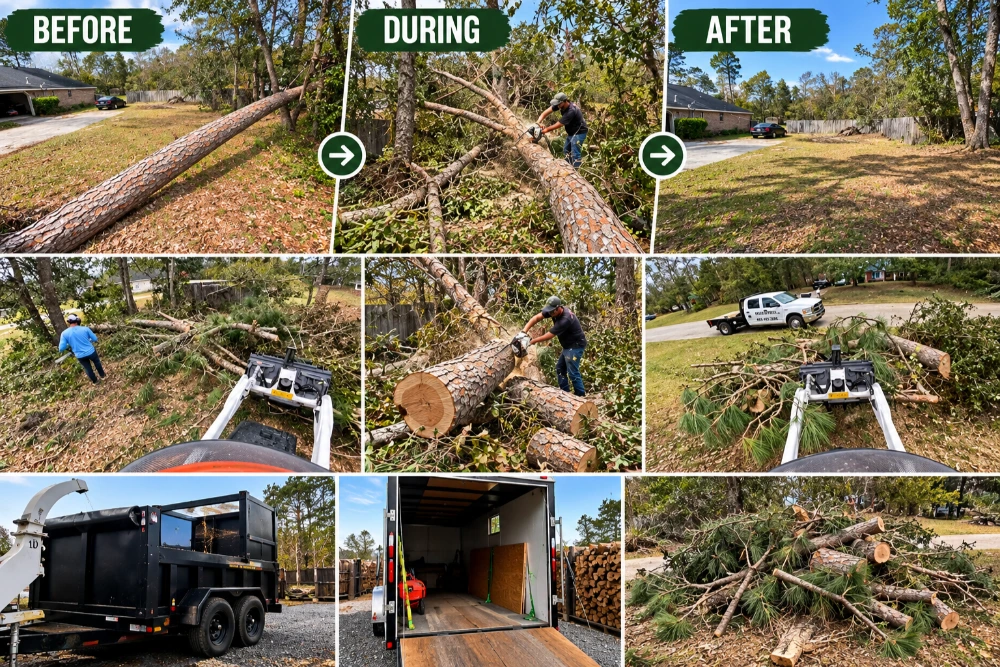
Small trees with open space come down in sections or in one piece. Trees over a house, pool or power service are climbed and taken down in pieces on ropes, or lifted with a crane when the lot allows.
Cleanup
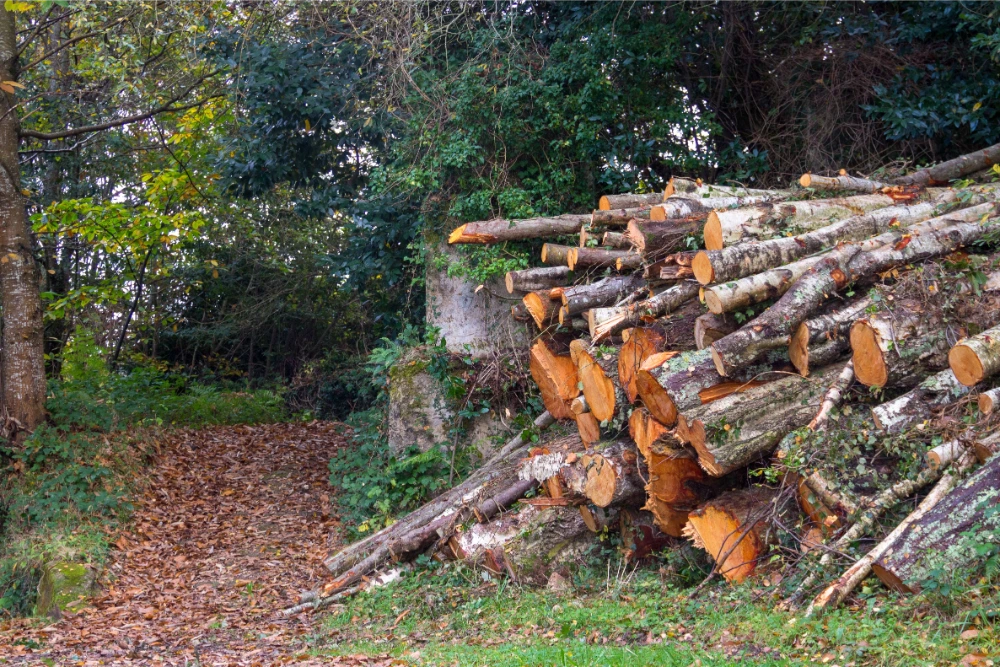
Limbs go through a chipper, logs are cut to length and hauled unless you want them for firewood. The ground is raked and checked for debris.
Stump Decision
You choose to grind the stump, leave it, or price it separately. Grinding is quoted as its own line so it should never surprise you on the invoice.
Storm-damaged tree: The order changes to safety and tarping first, then removal, then the paperwork you need for your insurance adjuster.
Tree Company, Lead-Gen Page or Storm-Chaser?
A named local company you can verify beats a page with no company behind it. After a storm, different providers compete for the same call, and they can behave very differently.
| What to Check | Local Tree Company | Lead-Gen Directory Page | Door-Knocker After a Storm |
|---|---|---|---|
| Who shows up | A named crew you can look up | A contractor assigned after you call | Whoever has a truck that day |
| Proof of insurance | Certificate of insurance on request | Often not stated on the page | Rarely offered |
| Written estimate | Yes, before work starts | Depends on the contractor | Often verbal or cash-only |
| Credentials | ISA certified arborist you can look up | Claims that cannot always be checked | Usually none |
| If something breaks | One company is accountable | Unclear who is responsible | Often unreachable later |
We are the middle column, and we say so: this site is a referral service, not the contractor.
Georgia has no state license for tree services, so credentials and insurance are important checks. Ask for these four things from anyone you are considering, including us.
What to Do in the First Hour
Get everyone out of danger, keep at least 10 feet from any wire, call 911 for injury or fire, then document the damage and call a tree service. Do these in order.
Safety First
- Move everyone away from damaged areas.
- Treat every power line as live.
- Call 911 for injury, fire, sparking or a dangerous downed line.
- Take photos before anything moves.
- Do not climb onto a damaged roof.
- Tell the tree service if the tree is on a house, wire or driveway.
- Ask your insurer whether an adjuster must see the damage first.
| Where the Tree Is | Who to Call First |
|---|---|
| On a person or someone is hurt | 911 |
| On a power line, or a line is down or sparking | 911 if there is fire or sparking, then the utility |
| On the house | Tree service, then your insurer |
| On a public street or right-of-way | The City of Augusta, not a tree crew |
| In your yard, no damage | Tree service for a scheduled removal |
We do not promise an arrival time on this page, because storm demand changes every hour. Call, and you get an honest estimate of timing, not a guarantee we cannot keep.
Typical published range: $400–$1,800. These are estimates, not quotes from our contractor.
Tree Removal Cost Augusta GA: What Changes the Quote
There is no standard price for a tree, because two trees of the same height can cost very different amounts to remove.
The main price drivers are size, access, condition, hazards and what is included.
- Height and trunk diameter: Taller, thicker trees mean more cutting, rigging and material to haul.
- Access: Open yards are generally easier than fences, pools or tight backyards.
- Condition: Dead or rotted trees can break unpredictably.
- Nearby hazards: Houses, roofs, service lines and power lines raise risk and time.
- Crane or lift: Needed only when a tree cannot be safely climbed or lowered.
- What’s included: Haul-away, chips, firewood-length logs and stump grinding may be separate.
- Timing: Emergency and post-storm work typically costs more than scheduled removal.
Ask for each line to be written separately on the estimate so you can compare two quotes fairly.
| Line Item | Included? | Published Estimate / Range |
|---|---|---|
| Tree cutting and lowering | Base price | About $1,100 average; typical $400–$1,800. Under 30 ft: $150–$500. 30–60 ft: $500–$1,200. 60–100 ft: $1,200–$2,500. |
| Haul-away of logs and brush | Varies | Keeping wood on site can save $100–$200; some companies bill stump debris separately. |
| Stump grinding | Usually extra | $2–$6 per inch of stump diameter; roughly $120–$400 for one stump; minimums may apply. |
| Crane or lift | Only if needed | $500–$800 per day plus a certified operator. |
| Permit handling | Only if required | $50–$250 where permit and inspection apply. |
Prices above are published online estimates as of October 2026, not quotes from our contractor. Emergency and storm work typically adds 20%–50%. Replace these ranges with the contractor’s real Augusta prices before launch.
Which Augusta Trees Fail Most Often?
Augusta’s hot, humid summers, thunderstorms and occasional tropical remnants create conditions where mature shade trees and pines can develop serious structural problems.
Water Oak
Why it failsShort-lived oak that can decay from the inside and drop heavy limbs.
Warning signsHollow cavities, fungus at the base, dead limbs in the canopy and bark peeling off in plates.
Loblolly Pine
Why it failsStressed pines can attract southern pine beetles; shallow roots in wet soil can also contribute to instability.
Warning signsNeedles fading from green to yellow or red, pitch tubes, woodpecker damage and bark falling away.
Sweetgum
Why it failsShallow surface roots and heavy seed pods can create problems around established properties.
Warning signsHeaved sidewalks and driveways, dead tops and large limbs breaking during storms.
Bradford Pear
Why it failsNarrow branch angles can make the tree vulnerable to splitting during wind and ice.
Warning signsSplit trunks, cracked crotches and limbs hanging at the fork.
Dead Branches
More than a few dead limbs in an oak or pine is a reason to have an arborist inspect the tree rather than simply wait.
Leaning or Cracked Trunks
A new lean after a storm or soil lifting around the roots can mean the tree may fall without warning.
Fungus or Hollow Sections
Mushrooms or conks at the base and hollow trunk sections can point to internal decay.
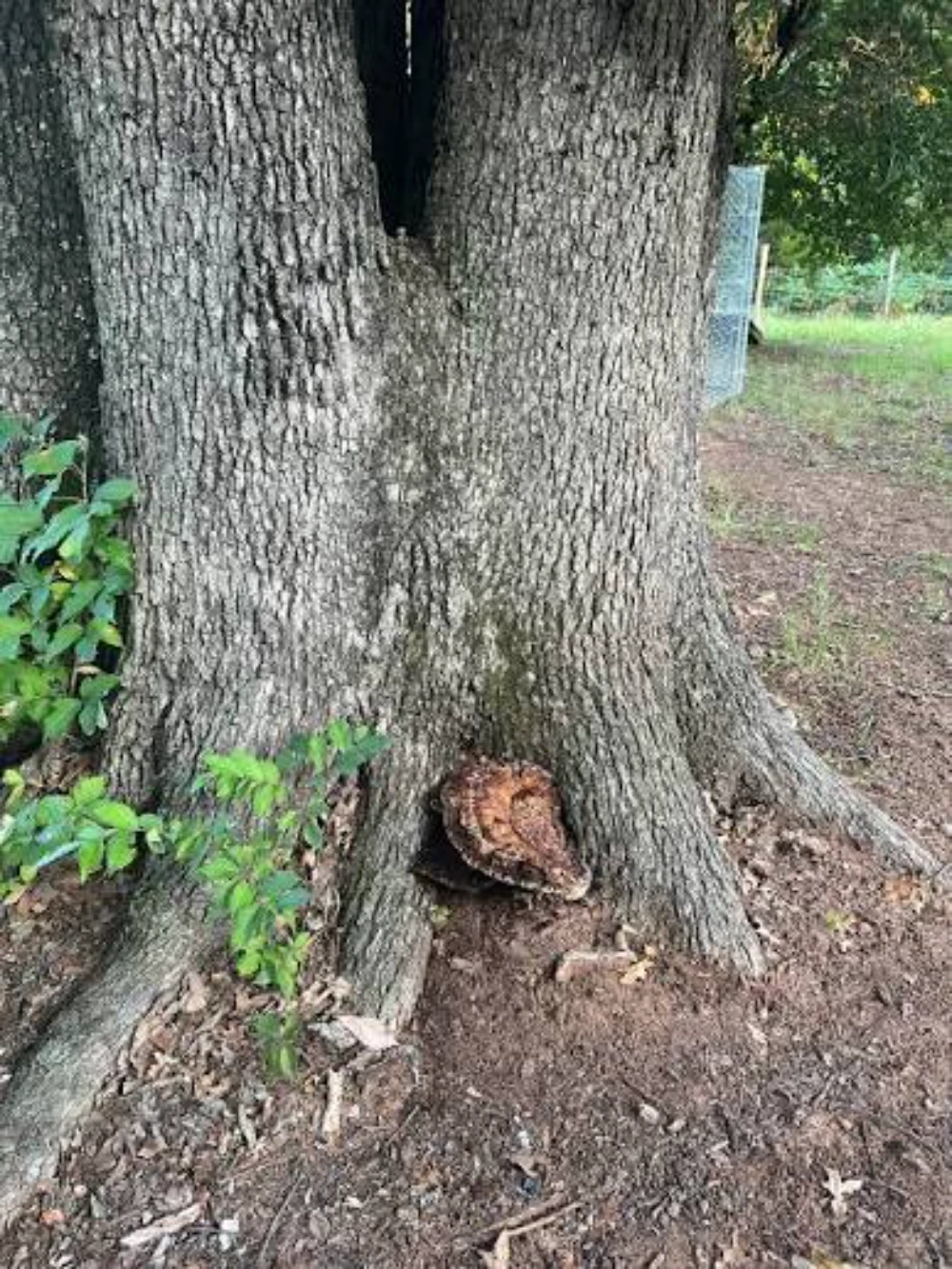

Since Hurricane Helene in September 2024, many Augusta yards hold trees that were stressed, partly uprooted or lost large limbs but did not fall. Those trees can look fine from the road and still be a hazard. An inspection is the safe way to find out, and removal is only one possible outcome: pruning or monitoring is sometimes the right answer.
Local Rules to Check Before Anyone Cuts a Tree
Permits, burning, curbside yard waste, power lines and property lines cause many of the surprises homeowners encounter.
| Rule | What to Know | Confirm With |
|---|---|---|
| Tree permit | Richmond County generally exempts removals on lots under 1 acre, up to 5 trees a year, with landmark trees as an exception. | Augusta Planning and Development |
| Burning debris | Storm debris and land-clearing burns need a Georgia Forestry Commission permit; hand-piled yard debris does not. | Georgia Forestry Commission |
| Curbside yard waste | Collected weekly, with a 5 ft maximum length per item; storm pickups may be announced separately. | Augusta Environmental Services |
| Power lines | The utility handles lines between poles; the service drop to your house is usually handled separately. | Your electric utility |
| Property line | A tree on the line is shared; trimming to the line is allowed, but cutting a neighbor’s tree can create legal issues. | Georgia attorney or survey |
Columbia County, which includes Evans and Grovetown, has its own rules. We check the correct jurisdiction for the address before we quote a job.
Where We Work Around Augusta
We work in Augusta and Richmond County, and in nearby Evans, Martinez and Grovetown.
Augusta & Richmond County
Older neighborhoods with mature water oaks and pines, often close to houses, fences and service lines.
Evans
Larger lots and a higher share of owner-occupied homes. Columbia County has its own permit rules.
Martinez
Established streets with tall pines and oaks over roofs. Falling limbs and storm breakage are common reasons for calls.
Grovetown
Newer subdivisions where Bradford pears and younger trees are common.
If your address is outside these areas, call anyway. We will tell you straight whether the contractor serves it.
Recent Jobs From Around Augusta
The following case studies should only be published if they describe real jobs, the customers agreed to be quoted, and dates and photos are verified before launch.
Water Oak Limb Over a Roof in Summerville
Situation: A large water oak had a heavy limb extending over a homeowner’s roof, creating a risk of property damage.
What We Found: Decay, fungal growth and several dead branches in the affected section.
What We Did: The crew climbed the tree and lowered the limb in controlled sections. No crane was needed.
Result: About 4 hours. Debris removed, area cleaned and stump left in place.
$1,250“The crew worked carefully around our roof and left everything clean.” — Sarah, Summerville
Loblolly Pines With Beetle Damage in West Augusta
Situation: A homeowner noticed several loblolly pines with changing needle color and signs of decline.
What We Found: Two trees showed serious beetle damage and were no longer safe to keep, while the remaining trees were healthy.
What We Did: The two damaged pines were removed using controlled cutting and rigging while protecting the home and landscape.
Result: Trees removed, debris hauled away and two stumps ground.
$2,100“They explained which trees were actually a problem and left the healthy ones alone.” — Mark, West Augusta
Storm-Damaged Tree on a House in Forest Hills
Situation: A large tree fell onto a home after a severe storm, damaging the roof and creating an immediate safety concern.
What We Did First: The crew secured the area, checked utility hazards and helped protect the exposed roof while the homeowner contacted insurance.
What We Did: The tree was removed in controlled sections using rigging. No crane was needed.
Result: The house was cleared in about 6 hours, debris hauled away and documentation photos provided.
$3,850“They responded quickly and helped us document everything for our insurance claim.” — John, Forest Hills
Tree Removal Questions Augusta Homeowners Ask
How much does it cost to remove a tree in Augusta?
The cost depends on height, trunk size, access, condition and what the quote includes. A reliable quote should be written, specific to your tree and list haul-away and stump grinding as included or extra. A small tree in open space can cost far less than a tall, dead oak beside a house.
Do you need a permit to remove a tree in Augusta?
Often no. Richmond County generally exempts removals on lots under 1 acre, up to five trees a year, although landmark trees are an exception. Commercial, development and Columbia County properties can differ, so confirm with Augusta Planning and Development before cutting.
Who do I call when a tree falls on my house?
Call 911 if anyone is hurt or a wire is down or sparking. Otherwise call a tree service, then your insurance company. Take photos first, stay away from damaged roof areas and do not touch anything a wire may be touching.
A tree is on a power line. Who do I call?
Call 911 if the line is down, sparking or burning, then call your electric utility. Stay at least 10 feet away. Do not cut, move or spray a tree touching a wire, and do not let a tree crew try either.
Does homeowners insurance cover tree removal?
Usually only when the tree damages a covered structure such as your house, and often only up to a removal limit. A tree that falls in the yard without hitting anything is typically not covered. Policies differ, so read yours or ask your agent.
How do I know if my tree needs to come down?
A tree needs an arborist’s look if it has a new lean, cracked or hollow trunk, large dead limbs, fungus at the base or soil lifting around the roots. Removal is the right call when the tree is dead or likely to fall on something. A healthy tree with a few dead branches can often be pruned instead.
Can I cut down a tree myself?
You can consider it if the tree is small, healthy, away from wires and structures, and you have the right equipment and experience. Do not attempt it if the tree is tall, leaning, dead, over a house or near a power line.
Does tree removal include stump grinding?
Not usually. Stump grinding is normally a separate line item, so ask whether it is included. A crew cuts the tree at ground level, and a grinder removes the stump below the surface so the area can be filled and replanted.
How do I avoid tree removal scams after a storm like Helene?
Get a written estimate, ask for proof of insurance, never pay the full amount upfront and be wary of anyone who knocks on your door offering to cut trees immediately. Compare at least two written quotes when you can.
How do I know a tree contractor is insured?
Ask for a certificate of insurance showing general liability and workers’ compensation, sent directly from the insurer or agent. Then call the insurer to confirm the policy is active. A photo of a certificate from the crew alone is not proof.
Who pays for removal when the tree is on the property line?
A tree whose trunk sits on the boundary is generally shared, so both owners should agree to removal and usually share the cost. Neither neighbor should cut it down alone. A survey can help show where the line actually runs.
What if my neighbor’s tree hits my house?
Call your own insurer first. In general, your homeowner’s policy pays for damage to your house even when the tree is your neighbor’s, subject to the policy. Photograph the tree and damage. If you believe the neighbor ignored a known hazard, an attorney can advise you about possible claims.
Can I make my neighbor trim branches over my yard?
You can generally trim branches back to the property line yourself as long as you do not damage the tree or enter the neighbor’s property. A dead or clearly hazardous tree can raise different considerations. Start with a polite written request and photos.
Do I need a burn permit to burn storm debris in Georgia?
Storm debris and land-clearing burns require the applicable Georgia Forestry Commission permit. Hand-piled yard debris from your own yard may be treated differently, and burn bans or local rules can still apply.
Will Augusta pick up my tree debris?
Augusta collects certain yard waste curbside weekly, with items no longer than 5 ft. Whole trees and large logs are not part of routine pickup, and storm cleanups may be announced separately. Check with Augusta Environmental Services.
What is the cheapest time of year for tree removal?
It is typically cheaper outside storm season, when demand is lower, such as late fall and winter. Prices can rise after storms and during periods of unusually high demand.
Is winter a good time to prune trees in Augusta?
Yes for many trees. Late fall through winter is a common pruning period because the tree is dormant and its structure can be easier to see. Avoid heavy pruning during hot summers and do not top trees.
Get a Free Written Estimate
Good tree removal Augusta GA homeowners can rely on starts with a written price, proof of insurance and a crew that tells you honestly whether the tree needs to come down.
If you want to see how the numbers are built before you call, tree removal cost Augusta GA quotes should list cutting, haul-away, stump grinding and any crane separately.
For a tree on a house or a wire, call now and say so.
Business details: Phone: (706) 204-7547 • Address: 2215 Tobacco Rd, Augusta, GA 30906, USA • Hours: To be provided • Service area: Augusta, Richmond County, Evans, Martinez and Grovetown.
This site is a referral service. Work is performed by an independent, insured tree contractor. See the referral disclosure and contractor credentials pages for details.